

Archives
-
Vol.16. No.5 (Sep/Oct 2026)
The September/October 2026 issue of the International Journal of Current Engineering and Technology (IJCET) presents current research, innovations, and practical developments across diverse areas of engineering and technology. Volume 16, Number 5 brings together scholarly contributions addressing emerging challenges, advanced methodologies, sustainable technologies, computational approaches, materials, manufacturing, energy, electronics, and interdisciplinary engineering applications. The issue aims to support knowledge exchange between researchers, academicians, industry professionals, and students by highlighting contemporary solutions and research findings. Through peer-reviewed contributions, IJCET continues to provide a platform for disseminating meaningful scientific and technological advances. This issue reflects the journal’s commitment to encouraging innovation, excellence, sustainability, and impactful engineering research worldwide for a better future.
-
Vol.16, No.4 (Jul/Aug 2026)
The International Journal of Current Engineering and Technology (IJCET), Volume 16, Number 4 (Jul/Aug 2026), presents original research and innovative developments across diverse engineering disciplines. This issue features high-quality contributions in mechanical, civil, electrical, electronics, computer science, artificial intelligence, manufacturing, renewable energy, industrial engineering, and emerging technologies. The published papers address contemporary engineering challenges through novel methodologies, practical applications, and sustainable solutions. Emphasis is placed on interdisciplinary research that bridges academic knowledge with industrial practice. Each manuscript has undergone a rigorous peer-review process to ensure scientific quality, originality, and technical relevance. We hope this issue serves as a valuable resource for researchers, academicians, industry professionals, and students worldwide.
-
Vol.16, No.3 (May/Jun 2026)
The International Journal of Current Engineering and Technology (IJCET), Vol. 16, No. 2 (May/Jun 2026), is a peer-reviewed, open-access platform advancing multi-disciplinary engineering research. This issue emphasizes sustainable technological evolution, featuring breakthrough studies in artificial intelligence, smart manufacturing, renewable energy systems, and advanced material sciences. Bridging academia and industrial application, IJCET offers global researchers, engineers, and scientists a venue to publish original research, comprehensive reviews, and innovative technical notes. Committed to academic excellence and rigorous peer review, the journal fosters cross-border collaboration to address complex global challenges, driving the frontier of engineering excellence and technological modernization forward.
-

Vol.16, No.2 (Mar/Apr 2026)
Volume 16, Number 2 of the International Journal of Current Engineering and Technology presents a collection of peer-reviewed research articles covering recent developments and practical applications in diverse areas of engineering and technology. This issue highlights innovative studies in mechanical, electrical, civil, and computer engineering, focusing on modern design approaches, sustainable technologies, and advanced computational methods. The contributions aim to address current industrial challenges while promoting interdisciplinary research and technological advancement. Each manuscript has undergone a rigorous review process to ensure quality, originality, and relevance. The issue serves as a valuable resource for researchers, academicians, and industry professionals seeking insights into emerging trends and contemporary engineering solutions.
-

Vol.16, No.1 (Jan/Feb 2026)
Volume 16, Issue 1, 2026 presents cutting-edge research across diverse engineering disciplines. This issue features peer-reviewed articles exploring innovations in civil, mechanical, electrical, and computer engineering, alongside emerging fields such as sustainable technologies and smart systems. Our contributors-comprising researchers, academicians, and industry professionals from around the globe-address contemporary challenges through rigorous theoretical frameworks and practical applications. Articles examine advancements in materials science, renewable energy solutions, artificial intelligence integration, and infrastructure development. Each contribution undergoes stringent peer review, ensuring scholarly excellence and practical relevance. This issue continues our commitment to fostering knowledge exchange, promoting interdisciplinary collaboration, and advancing engineering practice worldwide.
-
Vol.15, No.6 (Nov/Dec 2025)
The final issue of 2025 concluded Volume 15 with impactful contributions across engineering and technology. Articles explored renewable energy, robotics, and computational modeling. Authors emphasized sustainability, presenting solutions that balanced innovation with environmental responsibility. The issue also highlighted automation and communication systems, showcasing how technology was reshaping industries. By publishing diverse research, the journal reinforced its mission to provide a platform for interdisciplinary collaboration. This issue demonstrated the journal’s commitment to advancing engineering knowledge while addressing global challenges, ensuring that research remains both academically rigorous and practically relevant for engineers worldwide.
-

Vol.15, No.5 (Sep/Oct 2025)
The fifth issue of Volume 15 showcased diverse contributions across engineering disciplines. Published in 2025, it included research on computational fluid dynamics, smart materials, and advanced manufacturing processes. Authors emphasized innovation, presenting solutions that addressed both technical and environmental concerns. The issue highlighted the importance of sustainability, reflecting global priorities in energy and resource management. By publishing high-quality research, the journal continued to build its reputation as a leading platform for engineers and technologists. This issue demonstrated how engineering excellence could drive progress, inspire innovation, and contribute meaningfully to the advancement of society.
-

Vol.15, No.4 (Jul/Aug 2025)
The fourth issue of 2025 highlighted interdisciplinary approaches to engineering challenges. Contributions included research on smart grid systems, advanced materials, and sustainable infrastructure. Authors explored how integrated solutions could improve efficiency and resilience across industries. The issue also featured computational modeling and robotics, showcasing the growing importance of digital tools and automation. By balancing theoretical insights with practical applications, the journal reinforced its mission to provide impactful research. This issue demonstrated how engineering innovation could inspire progress and contribute meaningfully to technological advancement and societal development worldwide.
-

Vol.15, No.3 (May/Jun 2025)
The third issue of Volume 15 emphasized applied research in emerging technologies. Published in 2025, it featured studies on robotics, renewable energy, and communication systems. Authors highlighted innovation, presenting solutions that addressed both technical and environmental concerns. The issue also included case studies on industrial automation, demonstrating the practical impact of engineering advancements. By encouraging collaboration between disciplines, the journal promoted holistic approaches to problem-solving. This issue reinforced the journal’s vision of advancing technology for societal benefit, ensuring that engineering research remains both academically rigorous and practically relevant in addressing global challenges.
-

Vol.15, No.2 (Mar/Apr 2025)
The second issue of 2025 showcased diverse contributions in civil, mechanical, and electrical engineering. Articles addressed challenges in structural design, thermal systems, and automation. Authors presented innovative solutions that improved efficiency, safety, and sustainability. The issue also included computational studies, reflecting the growing reliance on digital tools in engineering. By balancing theoretical insights with experimental validation, the journal ensured credibility and relevance. This issue reinforced the journal’s mission to publish research that not only advances academic knowledge but also provides practical strategies for engineers tackling real-world problems across industries and communities worldwide.
-
Vol.15, No.1 (Jan/Feb 2025)
The first issue of Volume 15 opened 2025 with a strong focus on innovation and applied research. Contributions included studies on smart materials, renewable energy, and computational approaches to engineering problems. Authors emphasized practical applications, ensuring relevance to industry and academia. The issue also featured case studies on infrastructure development, reflecting the importance of engineering in societal progress. By encouraging interdisciplinary collaboration, the journal continued to strengthen its role as a trusted platform for engineers. This issue highlighted the journal’s vision of advancing technology for sustainable development and global impact through high-quality research contributions.
-

Vol.14, No.6 (Nov/Dec 2024)
The final issue of 2024 concluded Volume 14 with impactful contributions across engineering and technology. Articles explored renewable energy, robotics, and computational modeling. Authors emphasized sustainability, presenting solutions that balanced innovation with environmental responsibility. The issue also highlighted automation and communication systems, showcasing how technology was reshaping industries. By publishing diverse research, the journal reinforced its mission to provide a platform for interdisciplinary collaboration. This issue demonstrated the journal’s commitment to advancing engineering knowledge while addressing global challenges, ensuring that research remains both academically rigorous and practically relevant for engineers worldwide.
-

Vol.14, No.5 (Sep/Oct 2024)
The fifth issue of Volume 14 showcased diverse contributions across engineering disciplines. Published in 2024, it included research on computational fluid dynamics, smart materials, and advanced manufacturing processes. Authors emphasized innovation, presenting solutions that addressed both technical and environmental concerns. The issue highlighted the importance of sustainability, reflecting global priorities in energy and resource management. By publishing high-quality research, the journal continued to build its reputation as a leading platform for engineers and technologists. This issue demonstrated how engineering excellence could drive progress, inspire innovation, and contribute meaningfully to the advancement of society.
-

Vol.14, No.4 (Jul/Aug 2024)
The fourth issue of 2024 highlighted interdisciplinary approaches to engineering challenges. Contributions included research on smart grid systems, advanced materials, and sustainable infrastructure. Authors explored how integrated solutions could improve efficiency and resilience across industries. The issue also featured computational modeling and robotics, showcasing the growing importance of digital tools and automation. By balancing theoretical insights with practical applications, the journal reinforced its mission to provide impactful research. This issue demonstrated how engineering innovation could inspire progress and contribute meaningfully to technological advancement and societal development worldwide.
-

Vol.14, No.3 (May/Jun 2024)
The third issue of Volume 14 emphasized applied research in emerging technologies. Published in 2024, it featured studies on robotics, renewable energy, and communication systems. Authors highlighted innovation, presenting solutions that addressed both technical and environmental concerns. The issue also included case studies on industrial automation, demonstrating the practical impact of engineering advancements. By encouraging collaboration between disciplines, the journal promoted holistic approaches to problem-solving. This issue reinforced the journal’s vision of advancing technology for societal benefit, ensuring that engineering research remains both academically rigorous and practically relevant in addressing global challenges.
-
Vol.14, No.2 (Mar/Apr 2024)
The second issue of 2024 showcased diverse contributions in civil, mechanical, and electrical engineering. Articles addressed challenges in structural design, thermal systems, and automation. Authors presented innovative solutions that improved efficiency, safety, and sustainability. The issue also included computational studies, reflecting the growing reliance on digital tools in engineering. By balancing theoretical insights with experimental validation, the journal ensured credibility and relevance. This issue reinforced the journal’s mission to publish research that not only advances academic knowledge but also provides practical strategies for engineers tackling real-world problems across industries and communities worldwide.
-
Vol.14, No.1 (Jan/Feb 2024)
The first issue of Volume 14 opened 2024 with a strong focus on innovation and applied research. Contributions included studies on smart materials, renewable energy, and computational approaches to engineering problems. Authors emphasized practical applications, ensuring relevance to industry and academia. The issue also featured case studies on infrastructure development, reflecting the importance of engineering in societal progress. By encouraging interdisciplinary collaboration, the journal continued to strengthen its role as a trusted platform for engineers. This issue highlighted the journal’s vision of advancing technology for sustainable development and global impact through high-quality research contributions.
-
Vol.13, No.6 (Nov/Dec 2023)
The final issue of 2023 concluded Volume 13 with impactful contributions across engineering and technology. Articles explored renewable energy, robotics, and computational modeling. Authors emphasized sustainability, presenting solutions that balanced innovation with environmental responsibility. The issue also highlighted automation and communication systems, showcasing how technology was reshaping industries. By publishing diverse research, the journal reinforced its mission to provide a platform for interdisciplinary collaboration. This issue demonstrated the journal’s commitment to advancing engineering knowledge while addressing global challenges, ensuring that research remains both academically rigorous and practically relevant for engineers worldwide.
-
Vol.13, No.5 (Sep/Oct 2023)
The fifth issue of Volume 13 showcased diverse contributions across engineering disciplines. Published in 2023, it included research on computational fluid dynamics, smart materials, and advanced manufacturing processes. Authors emphasized innovation, presenting solutions that addressed both technical and environmental concerns. The issue highlighted the importance of sustainability, reflecting global priorities in energy and resource management. By publishing high-quality research, the journal continued to build its reputation as a leading platform for engineers and technologists. This issue demonstrated how engineering excellence could drive progress, inspire innovation, and contribute meaningfully to the advancement of society.
-
Vol.13, No.4 (Jul/Aug 2023)
The fourth issue of 2023 highlighted interdisciplinary approaches to engineering challenges. Contributions included research on smart grid systems, advanced materials, and sustainable infrastructure. Authors explored how integrated solutions could improve efficiency and resilience across industries. The issue also featured computational modeling and robotics, showcasing the growing importance of digital tools and automation. By balancing theoretical insights with practical applications, the journal reinforced its mission to provide impactful research. This issue demonstrated how engineering innovation could inspire progress and contribute meaningfully to technological advancement and societal development worldwide.
-
Vol.13. No.3 (May/Jun 2023)
Volume 13, Number 3 (2023) of the International Journal of Current Engineering and Technology presents a diverse collection of peer-reviewed research highlighting recent developments in engineering and applied sciences. This issue focuses on interdisciplinary approaches, combining theoretical concepts with practical applications across fields such as mechanical, electrical, civil, and computer engineering. The articles emphasize innovative methodologies, experimental analysis, and sustainable solutions addressing real-world engineering challenges. Contributions from researchers and industry experts ensure a balance between academic rigor and practical relevance. All papers have undergone a strict peer-review process, maintaining the journal’s standards of quality, originality, and significance in advancing engineering knowledge globally.
-
Vol.13, No.2 (Mar/Apr 2023)
The second issue of 2023 showcased diverse contributions across civil, mechanical, and electrical engineering. Articles addressed challenges in structural design, thermal systems, and automation. Authors presented innovative solutions that improved efficiency, safety, and sustainability. The issue also included computational studies, reflecting the growing reliance on digital tools in engineering. By balancing theoretical insights with experimental validation, the journal ensured credibility and relevance. This issue reinforced the journal’s mission to publish research that not only advances academic knowledge but also provides practical strategies for engineers tackling real-world problems across industries and communities worldwide.
-
Vol.13, No.1 (Jan/Feb 2023)
The first issue of Volume 13 opened 2023 with a strong emphasis on innovation and sustainability. Articles explored renewable energy, smart materials, and computational modeling. Authors highlighted practical applications, ensuring relevance to both academia and industry. The issue also featured case studies on infrastructure development, reflecting engineering’s role in societal progress. By encouraging interdisciplinary collaboration, the journal reinforced its mission to provide impactful research. This issue demonstrated how engineering excellence could inspire innovation and contribute meaningfully to technological advancement, ensuring that research remains both academically rigorous and practically relevant for global communities.
-
Vol.12, No.6 (Nov/Dec 2022)
The final issue of 2022 concluded Volume 12 with impactful contributions across engineering and technology. Articles explored renewable energy, robotics, and computational modeling. Authors emphasized sustainability, presenting solutions that balanced innovation with environmental responsibility. The issue also highlighted automation and communication systems, showcasing how technology was reshaping industries. By publishing diverse research, the journal reinforced its mission to provide a platform for interdisciplinary collaboration. This issue demonstrated the journal’s commitment to advancing engineering knowledge while addressing global challenges, ensuring that research remains both academically rigorous and practically relevant for engineers worldwide.
-
Vol.12, No.5 (Sep/Oct 2022)
The fifth issue of Volume 12 showcased diverse contributions across engineering disciplines. Published in 2022, it included research on computational fluid dynamics, smart materials, and advanced manufacturing processes. Authors emphasized innovation, presenting solutions that addressed both technical and environmental concerns. The issue highlighted the importance of sustainability, reflecting global priorities in energy and resource management. By publishing high-quality research, the journal continued to build its reputation as a leading platform for engineers and technologists. This issue demonstrated how engineering excellence could drive progress, inspire innovation, and contribute meaningfully to the advancement of society.
-
Vol.12, No.4 (Jul/Aug 2022)
The fourth issue of 2022 highlighted interdisciplinary approaches to engineering challenges. Contributions included research on smart grid systems, advanced materials, and sustainable infrastructure. Authors explored how integrated solutions could improve efficiency and resilience across industries. The issue also featured computational modeling and robotics, showcasing the growing importance of digital tools and automation. By balancing theoretical insights with practical applications, the journal reinforced its mission to provide impactful research. This issue demonstrated how engineering innovation could inspire progress and contribute meaningfully to technological advancement and societal development worldwide.
-
Vol.12, No.3 (May/Jun 2022)
The third issue of Volume 12 emphasized applied research in emerging technologies. Published in 2022, it featured studies on robotics, renewable energy, and communication systems. Authors highlighted innovation, presenting solutions that addressed both technical and environmental concerns. The issue also included case studies on industrial automation, demonstrating the practical impact of engineering advancements. By encouraging collaboration between disciplines, the journal promoted holistic approaches to problem-solving. This issue reinforced the journal’s vision of advancing technology for societal benefit, ensuring that engineering research remains both academically rigorous and practically relevant in addressing global challenges.
-

Vol.12, No.2 (Mar/Apr 2022)
The second issue of 2022 showcased diverse contributions in civil, mechanical, and electrical engineering. Articles addressed challenges in structural design, thermal systems, and automation. Authors presented innovative solutions that improved efficiency, safety, and sustainability. The issue also included computational studies, reflecting the growing reliance on digital tools in engineering. By balancing theoretical insights with experimental validation, the journal ensured credibility and relevance. This issue reinforced the journal’s mission to publish research that not only advances academic knowledge but also provides practical strategies for engineers tackling real-world problems across industries and communities worldwide.
-
Vol.12, No.1 (Jan/Feb 2022)
The first issue of Volume 12 opened 2022 with a strong focus on innovation and applied research. Contributions included studies on smart materials, renewable energy, and computational approaches to engineering problems. Authors emphasized practical applications, ensuring relevance to industry and academia. The issue also featured case studies on infrastructure development, reflecting the importance of engineering in societal progress. By encouraging interdisciplinary collaboration, the journal continued to strengthen its role as a trusted platform for engineers. This issue highlighted the journal’s vision of advancing technology for sustainable development and global impact through high-quality research contributions.
-
Vol.11, No.6 (Nov/Dec 2021)
The sixth issue of 2021 concluded Volume 11 with impactful contributions across engineering and technology. Articles explored renewable energy, robotics, and computational modeling. Authors emphasized sustainability, presenting solutions that balanced innovation with environmental responsibility. The issue also highlighted automation and communication systems, showcasing how technology was reshaping industries. By publishing diverse research, the journal reinforced its mission to provide a platform for interdisciplinary collaboration. This issue demonstrated the journal’s commitment to advancing engineering knowledge while addressing global challenges, ensuring that research remains both academically rigorous and practically relevant for engineers worldwide.
-

Vol.11, No.5 (Sep/Oct 2021)
The fifth issue of Volume 11 showcased diverse contributions across engineering disciplines. Published in 2021, it included research on computational fluid dynamics, smart materials, and advanced manufacturing processes. Authors emphasized innovation, presenting solutions that addressed both technical and environmental concerns. The issue highlighted the importance of sustainability, reflecting global priorities in energy and resource management. By publishing high-quality research, the journal continued to build its reputation as a leading platform for engineers and technologists. This issue demonstrated how engineering excellence could drive progress, inspire innovation, and contribute meaningfully to the advancement of society.
-

Vol.11, No.4 (Jul/Aug 2021)
The fourth issue of 2021 highlighted interdisciplinary approaches to engineering challenges. Contributions included research on smart grid systems, advanced materials, and sustainable infrastructure. Authors explored how integrated solutions could improve efficiency and resilience across industries. The issue also featured computational modeling and robotics, showcasing the growing importance of digital tools and automation. By balancing theoretical insights with practical applications, the journal reinforced its mission to provide impactful research. This issue demonstrated how engineering innovation could inspire progress and contribute meaningfully to technological advancement and societal development worldwide.
-
Vol.11, No.3 (May/Jun 2021)
The third issue of Volume 11 emphasized applied research in mechanical and electrical engineering. Published in 2021, it featured studies on robotics, renewable energy, and computational modeling. Authors presented innovative solutions to industrial challenges, highlighting the importance of engineering in economic growth. The issue also included case studies on automation, reflecting the growing role of intelligent systems. By combining theoretical models with experimental validation, the journal ensured credibility and relevance. This issue showcased the journal’s dedication to publishing research that not only advances knowledge but also provides actionable strategies for engineers tackling real-world problems.
-
Vol.11, No.2 (Mar/Apr 2021)
The second issue of 2021 showcased diverse contributions in civil, mechanical, and electrical engineering. Articles addressed challenges in structural design, thermal systems, and automation. Authors presented innovative solutions that improved efficiency, safety, and sustainability. The issue also included computational studies, reflecting the growing reliance on digital tools in engineering. By balancing theoretical insights with experimental validation, the journal ensured credibility and relevance. This issue reinforced the journal’s mission to publish research that not only advances academic knowledge but also provides practical strategies for engineers tackling real-world problems across industries and communities worldwide.
-

Vol.11, No.1 (Jan/Feb 2021)
The first issue of Volume 11 opened 2021 with a strong focus on innovation and applied research. Contributions included studies on smart materials, renewable energy, and computational approaches to engineering problems. Authors emphasized practical applications, ensuring relevance to industry and academia. The issue also featured case studies on infrastructure development, reflecting the importance of engineering in societal progress. By encouraging interdisciplinary collaboration, the journal continued to strengthen its role as a trusted platform for engineers. This issue highlighted the journal’s vision of advancing technology for sustainable development and global impact through high-quality research contributions.
-

Vol.10, No.6 (Nov/Dec 2020)
The final issue of 2020 concluded Volume 10 with impactful contributions across engineering and technology. Articles explored renewable energy, robotics, and computational modeling. Authors emphasized sustainability, presenting solutions that balanced innovation with environmental responsibility. The issue also highlighted automation and communication systems, showcasing how technology was reshaping industries. By publishing diverse research, the journal reinforced its mission to provide a platform for interdisciplinary collaboration. This issue demonstrated the journal’s commitment to advancing engineering knowledge while addressing global challenges, ensuring that research remains both academically rigorous and practically relevant for engineers worldwide.
-
Vol.10, No.5 (Sep/Oct 2020)
The fifth issue of Volume 10 showcased diverse contributions across engineering disciplines. Published in 2020, it included research on computational fluid dynamics, smart materials, and advanced manufacturing processes. Authors emphasized innovation, presenting solutions that addressed both technical and environmental concerns. The issue highlighted the importance of sustainability, reflecting global priorities in energy and resource management. By publishing high-quality research, the journal continued to build its reputation as a leading platform for engineers and technologists. This issue demonstrated how engineering excellence could drive progress, inspire innovation, and contribute meaningfully to the advancement of society.
-
Vol.10, No.4 (Jul/Aug 2020)
The fourth issue of 2020 highlighted interdisciplinary approaches to engineering challenges. Contributions included research on smart grid systems, advanced materials, and sustainable infrastructure. Authors explored how integrated solutions could improve efficiency and resilience across industries. The issue also featured computational modeling and robotics, showcasing the growing importance of digital tools and automation. By balancing theoretical insights with practical applications, the journal reinforced its mission to provide impactful research. This issue demonstrated how engineering innovation could inspire progress and contribute meaningfully to technological advancement and societal development worldwide.
-
Vol.10, No.3 (May/Jun 2020)
The third issue of Volume 10 emphasized applied research in emerging technologies. Published in 2020, it featured studies on robotics, renewable energy, and communication systems. Authors highlighted innovation, presenting solutions that addressed both technical and environmental concerns. The issue also included case studies on industrial automation, demonstrating the practical impact of engineering advancements. By encouraging collaboration between disciplines, the journal promoted holistic approaches to problem-solving. This issue reinforced the journal’s vision of advancing technology for societal benefit, ensuring that engineering research remains both academically rigorous and practically relevant in addressing global challenges.
-

Vol.10, No.2 (Mar/Apr 2020)
The second issue of 2020 showcased diverse contributions in civil, mechanical, and electrical engineering. Articles addressed challenges in structural design, thermal systems, and automation. Authors presented innovative solutions that improved efficiency, safety, and sustainability. The issue also included computational studies, reflecting the growing reliance on digital tools in engineering. By balancing theoretical insights with experimental validation, the journal ensured credibility and relevance. This issue reinforced the journal’s mission to publish research that not only advances academic knowledge but also provides practical strategies for engineers tackling real-world problems across industries and communities worldwide.
-

Vol.10, No.1 (Jan/Feb 2020)
The first issue of Volume 10 opened 2020 with a strong focus on innovation and applied research. Contributions included studies on smart materials, renewable energy, and computational modeling. Authors emphasized practical applications, ensuring relevance to industry and academia. The issue also featured case studies on infrastructure development, reflecting the importance of engineering in societal progress. By encouraging interdisciplinary collaboration, the journal continued to strengthen its role as a trusted platform for engineers. This issue highlighted the journal’s vision of advancing technology for sustainable development and global impact through high-quality research contributions.
-

Vol.9, No.6 (Nov/Dec 2019 )
The final issue of 2019 concluded Volume 9 with impactful contributions across engineering disciplines. Articles explored sustainable infrastructure, robotics, and computational approaches to problem-solving. Authors emphasized innovation, presenting solutions that addressed both technical and environmental challenges. The issue also highlighted automation and communication systems, reflecting the growing role of technology in reshaping industries. By publishing diverse research, the journal reinforced its mission to provide a platform for interdisciplinary collaboration. This issue demonstrated the journal’s commitment to advancing engineering knowledge while addressing global challenges, ensuring that research remains both academically rigorous and practically relevant.
-
Vol.9, No.5 (Sep/Oct 2019)
The fifth issue of Volume 9 highlighted diverse contributions across engineering and technology. Published in 2019, it featured studies on renewable energy, smart grid systems, and advanced manufacturing. Authors emphasized sustainability, presenting solutions that balanced innovation with environmental responsibility. The issue also included computational modeling and robotics, showcasing the growing importance of digital tools and automation. By encouraging interdisciplinary collaboration, the journal reinforced its mission to provide impactful research. This issue demonstrated how engineering innovation could inspire progress and contribute meaningfully to technological advancement and societal development worldwide.
-
Vol.9, No.4 (Jul/Aug 2019)
The fourth issue of 2019 highlighted interdisciplinary approaches to engineering challenges. Contributions included research on smart grid systems, advanced materials, and sustainable infrastructure. Authors explored how integrated solutions could improve efficiency and resilience across industries. The issue also featured computational modeling and robotics, showcasing the growing importance of digital tools and automation. By balancing theoretical insights with practical applications, the journal reinforced its mission to provide impactful research. This issue demonstrated how engineering innovation could inspire progress and contribute meaningfully to technological advancement and societal development worldwide.
-
Vol.9, No.3 (May/Jun 2019)
The third issue of Volume 9 emphasized applied research in emerging technologies. Published in 2019, it featured studies on robotics, renewable energy, and communication systems. Authors highlighted innovation, presenting solutions that addressed both technical and environmental concerns. The issue also included case studies on industrial automation, demonstrating the practical impact of engineering advancements. By encouraging collaboration between disciplines, the journal promoted holistic approaches to problem-solving. This issue reinforced the journal’s vision of advancing technology for societal benefit, ensuring that engineering research remains both academically rigorous and practically relevant in addressing global challenges.
-
Vol.9, No.2 (Mar/Apr 2019)
The second issue of 2019 showcased diverse contributions in civil, mechanical, and electrical engineering. Articles addressed challenges in structural design, thermal systems, and automation. Authors presented innovative solutions that improved efficiency, safety, and sustainability. The issue also included computational studies, reflecting the growing reliance on digital tools in engineering. By balancing theoretical insights with experimental validation, the journal ensured credibility and relevance. This issue reinforced the journal’s mission to publish research that not only advances academic knowledge but also provides practical strategies for engineers tackling real-world problems across industries and communities worldwide.
-

Vol.9, No.1 (Jan/Feb 2019)
The first issue of Volume 9 opened 2019 with a strong focus on innovation and applied research. Contributions included studies on smart materials, renewable energy, and computational approaches to engineering problems. Authors emphasized practical applications, ensuring relevance to industry and academia. The issue also featured case studies on infrastructure development, reflecting the importance of engineering in societal progress. By encouraging interdisciplinary collaboration, the journal continued to strengthen its role as a trusted platform for engineers. This issue highlighted the journal’s vision of advancing technology for sustainable development and global impact through high-quality research contributions.
-

Vol.8, No.6 (Nov/Dec 2018)
The final issue of 2018 concluded Volume 8 with impactful contributions across engineering and technology. Articles explored renewable energy, robotics, and computational modeling. Authors emphasized sustainability, presenting solutions that balanced innovation with environmental responsibility. The issue also highlighted automation and communication systems, showcasing how technology was reshaping industries. By publishing diverse research, the journal reinforced its mission to provide a platform for interdisciplinary collaboration. This issue demonstrated the journal’s commitment to advancing engineering knowledge while addressing global challenges, ensuring that research remains both academically rigorous and practically relevant for engineers worldwide.
-

Vol.8, No.5 (Sep/Oct 2018)
The fifth issue of Volume 8 showcased diverse contributions across engineering disciplines. Published in 2018, it included research on computational fluid dynamics, smart materials, and advanced manufacturing processes. Authors emphasized innovation, presenting solutions that addressed both technical and environmental concerns. The issue highlighted the importance of sustainability, reflecting global priorities in energy and resource management. By publishing high-quality research, the journal continued to build its reputation as a leading platform for engineers and technologists. This issue demonstrated how engineering excellence could drive progress, inspire innovation, and contribute meaningfully to the advancement of society.
-

Vol.8, No.4 (Jul/Aug 2018)
The fourth issue of 2018 highlighted interdisciplinary approaches to engineering challenges. Contributions included research on smart grid systems, advanced materials, and sustainable infrastructure. Authors explored how integrated solutions could improve efficiency and resilience across industries. The issue also featured computational modeling and robotics, showcasing the growing importance of digital tools and automation. By balancing theoretical insights with practical applications, the journal reinforced its mission to provide impactful research. This issue demonstrated how engineering innovation could inspire progress and contribute meaningfully to technological advancement and societal development worldwide.
-

Vol.8, No.3 (May/Jun 2018)
The third issue of Volume 8 emphasized applied research in emerging technologies. Published in 2018, it featured studies on robotics, renewable energy, and communication systems. Authors highlighted innovation, presenting solutions that addressed both technical and environmental concerns. The issue also included case studies on industrial automation, demonstrating the practical impact of engineering advancements. By encouraging collaboration between disciplines, the journal promoted holistic approaches to problem-solving. This issue reinforced the journal’s vision of advancing technology for societal benefit, ensuring that engineering research remains both academically rigorous and practically relevant in addressing global challenges.
-

Vol.8, No.2 (Mar/Apr 2018)
The second issue of 2018 showcased diverse contributions across civil, mechanical, and electrical engineering. Articles addressed challenges in structural design, thermal systems, and automation. Authors presented innovative solutions that improved efficiency, safety, and sustainability. The issue also included computational studies, reflecting the growing reliance on digital tools in engineering. By balancing theoretical insights with experimental validation, the journal ensured credibility and relevance. This issue reinforced the journal’s mission to publish research that not only advances academic knowledge but also provides practical strategies for engineers tackling real-world problems across industries and communities worldwide.
-

Vol.8, No.1 (Jan/Feb 2018)
The first issue of Volume 8 opened 2018 with a strong emphasis on innovation and sustainability. Articles explored renewable energy, smart materials, and computational modeling. Authors highlighted practical applications, ensuring relevance to both academia and industry. The issue also featured case studies on infrastructure development, reflecting engineering’s role in societal progress. By encouraging interdisciplinary collaboration, the journal reinforced its mission to provide impactful research. This issue demonstrated how engineering excellence could inspire innovation and contribute meaningfully to technological advancement, ensuring that research remains both academically rigorous and practically relevant for global communities.
-

Vol.7, No.6 (Nov/Dec 2017)
The final issue of 2017 concluded Volume 7 with impactful contributions across engineering and technology. Articles explored renewable energy, robotics, and computational modeling. Authors emphasized sustainability, presenting solutions that balanced innovation with environmental responsibility. The issue also highlighted automation and communication systems, showcasing how technology was reshaping industries. By publishing diverse research, the journal reinforced its mission to provide a platform for interdisciplinary collaboration. This issue demonstrated the journal’s commitment to advancing engineering knowledge while addressing global challenges, ensuring that research remains both academically rigorous and practically relevant for engineers worldwide.
-

Vol.7, No.5 (Sep/Oct 2017)
The fifth issue of Volume 7 showcased diverse contributions across engineering disciplines. Published in 2017, it included research on computational fluid dynamics, smart grid technologies, and advanced manufacturing processes. Authors emphasized innovation, presenting solutions that addressed both technical and environmental concerns. The issue highlighted the importance of sustainability, reflecting global priorities in energy and resource management. By publishing high-quality research, the journal continued to build its reputation as a leading platform for engineers and technologists. This issue demonstrated how engineering excellence could drive progress, inspire innovation, and contribute meaningfully to the advancement of society.
-

Vol.7, No.4 (Jul/Aug 2017)
The fourth issue of 2017 highlighted interdisciplinary approaches to engineering challenges. Contributions included research on communication technologies, smart materials, and sustainable infrastructure. Authors explored how integrated solutions could improve efficiency and resilience across industries. The issue also featured case studies on industrial automation, demonstrating the practical impact of engineering innovation. By encouraging collaboration between mechanical, electrical, and computer engineers, the journal promoted holistic problem-solving. This issue reinforced the journal’s vision of advancing technology for societal benefit, ensuring that engineering research remains both academically rigorous and practically relevant in addressing global challenges.
-

Vol.7, No.3 (May/Jun 2017)
The third issue of Volume 7 emphasized applied research in mechanical and electrical engineering. Published in 2017, it featured studies on robotics, thermal systems, and renewable energy. Authors presented innovative solutions to industrial challenges, highlighting the importance of engineering in economic growth. The issue also included computational approaches to problem-solving, reflecting the increasing reliance on digital tools. By combining experimental validation with theoretical models, the journal ensured credibility and relevance. This issue showcased the journal’s dedication to publishing research that not only advances knowledge but also provides actionable strategies for engineers tackling real-world problems.
-

Vol.7, No.2 (Mar/Apr 2017)
The second issue of 2017 showcased diverse contributions in civil, mechanical, and electrical engineering. Articles addressed challenges in structural design, thermal systems, and automation. Authors presented innovative solutions that improved efficiency, safety, and sustainability. The issue also included computational studies, reflecting the growing reliance on digital tools in engineering. By balancing theoretical insights with experimental validation, the journal ensured credibility and relevance. This issue reinforced the journal’s mission to publish research that not only advances academic knowledge but also provides practical strategies for engineers tackling real-world problems across industries and communities worldwide.
-

Special Issue-7 (Mar 2017)
The AMET-2017 (Advances in Mechanical Engineering Techniques) Conference was a notable national event jointly organized by MIT College of Engineering (MITCOE), Pune, and Defence Institute of Advanced Technology (DIAT), Pune, on March 16-17, 2017. Focused on emerging trends in mechanical engineering, it featured research presentations, reviews, and innovations in areas like thermal energy storage, heat exchangers, cryogenic grinding, centrifugal pumps, cyclone separators, and more. Selected papers from the conference were peer-reviewed and published in the Special Issue-7 (March 2017) of the International Journal of Current Engineering and Technology (IJCET). This special issue showcased high-quality contributions, highlighting collaborative academic efforts between MITCOE and DIAT to advance applied mechanical technologies.
-

Vol.7, No.1 (Jan/Feb 2017)
The first issue of Volume 7 opened 2017 with a strong focus on innovation and applied research. Contributions included studies on renewable energy, smart materials, and computational approaches to engineering problems. Authors emphasized practical applications, ensuring relevance to industry and academia. The issue also featured case studies on infrastructure development, reflecting the importance of engineering in societal progress. By encouraging interdisciplinary collaboration, the journal continued to strengthen its role as a trusted platform for engineers. This issue highlighted the journal’s vision of advancing technology for sustainable development and global impact through high-quality research contributions.
-
Vol.6, No.6 (Nov/Dec 2016)
The final issue of Volume 6 concluded 2016 with impactful contributions across engineering disciplines. Articles explored sustainable infrastructure, robotics, and advanced manufacturing processes. Authors emphasized innovation, presenting solutions that addressed both technical and environmental challenges. The issue also highlighted computational approaches, showcasing the importance of digital tools in modern engineering. By publishing high-quality research, the journal continued to strengthen its reputation as a trusted platform for engineers worldwide. This issue demonstrated how engineering excellence could inspire innovation and contribute meaningfully to societal progress through impactful research and technological advancement.
-

Special Issue-6 (Oct 2016)
This Special Issue (October 2016) of the International Journal of Current Engineering and Technology (IJCET) features selected research papers from the National Conference on Present Scenario in Mechanical Engineering (NCPSM 2016), organized by Marathwada Mitra Mandal's Institute of Technology (MMIT), Lohgaon, Pune, Maharashtra, India. The conference brought together researchers, postgraduate students, and academic professionals to deliberate on contemporary developments and emerging challenges in mechanical engineering and allied disciplines. The papers compiled in this issue cover a broad range of topics including thermal engineering, fluid dynamics, manufacturing processes, design and simulation, materials science, renewable energy, and industrial applications. Each contribution reflects original research and scholastic rigor, making this issue a meaningful addition to the engineering literature.
-

Vol.6, No.5 (Sep/Oct 2016)
The fifth issue of 2016 showcased diverse contributions in civil, mechanical, and electrical engineering. Articles addressed challenges in structural design, thermal systems, and communication technologies. Authors presented innovative solutions that improved efficiency, safety, and sustainability. The issue also featured computational studies, reflecting the increasing reliance on digital tools in engineering problem-solving. By encouraging interdisciplinary collaboration, the journal provided a platform for diverse perspectives. This issue reinforced the journal’s mission to publish research that not only advances academic knowledge but also provides practical strategies for engineers tackling real-world challenges across industries and communities.
-
Special Issue-5 (Jun 2016)
This Special Issue (June 2016) of the International Journal of Current Engineering and Technology (IJCET) presents selected research papers from the National Conference for PG Students in Mechanical Engineering (MECHPGCON 2016), organized by MIT College of Engineering, Pune, Maharashtra, India. The conference provided an excellent platform for postgraduate students, researchers, and academicians to present their scholarly work and engage in meaningful technical discussions on emerging challenges in mechanical engineering. The papers featured in this issue cover a wide spectrum of topics including design engineering, thermal and fluid systems, manufacturing technology, materials engineering, computational methods, energy systems, and industrial engineering. Each paper demonstrates strong academic merit and original research contribution to the field of mechanical engineering.
-
Vol.6, No.4 (Jul/Aug 2016)
The fourth issue of Volume 6 highlighted interdisciplinary research across engineering and technology. Published in 2016, it featured studies on renewable energy, smart grid systems, and advanced materials. Authors emphasized sustainability, reflecting global priorities in energy conservation and resource management. The issue also included computational modeling and robotics, showcasing the growing importance of digital tools and automation. By balancing theoretical insights with practical applications, the journal reinforced its mission to provide impactful research. This issue demonstrated how engineering innovation could inspire progress and contribute meaningfully to technological advancement and societal development worldwide.
-
Vol.6, No.3 (May/Jun 2016)
The third issue of Volume 6 emphasized applied research in emerging technologies. Published in 2016, it featured studies on renewable energy, robotics, and communication systems. Authors highlighted innovation, presenting solutions that addressed both technical and environmental concerns. The issue also included case studies on industrial automation, demonstrating the practical impact of engineering advancements. By encouraging collaboration between disciplines, the journal promoted holistic approaches to problem-solving. This issue reinforced the journal’s vision of advancing technology for societal benefit, ensuring that engineering research remains both academically rigorous and practically relevant in addressing global challenges.
-
Vol.6, No.2 (Mar/Apr 2016)
The second issue of 2016 showcased diverse contributions in civil, mechanical, and electrical engineering. Articles addressed challenges in structural design, thermal systems, and automation. Authors presented innovative solutions that improved efficiency, safety, and sustainability. The issue also included computational studies, reflecting the growing reliance on digital tools in engineering. By balancing theoretical insights with experimental validation, the journal ensured credibility and relevance. This issue reinforced the journal’s mission to publish research that not only advances academic knowledge but also provides practical strategies for engineers tackling real-world problems across industries and communities worldwide.
-
Special Issue-4 (Mar 2016)
Special Issue-4 (Mar 2016) of the International Journal of Current Engineering and Technology presents selected peer-reviewed papers from the Applied Mechanical Engineering Technologies (AMET 2016) conference organized by MIT College of Engineering, Pune, India. This section showcases original research and practical innovations addressing contemporary challenges in mechanical engineering and allied fields. The contributions emphasize experimental investigations, analytical modeling, design optimization, manufacturing processes, thermal and fluid engineering, materials, and emerging technologies. Each paper reflects the conference’s objective of bridging academic research with industrial applications, promoting knowledge exchange among researchers, academicians, and professionals. Collectively, the section captures the technical depth, interdisciplinary scope, and applied relevance that characterized AMET 2016, making it a valuable reference for researchers and practitioners alike.
-
Vol.6, No.1 (Jan/Feb 2016)
The first issue of Volume 6 opened 2016 with a strong focus on innovation and sustainability. Contributions included studies on renewable energy, robotics, and communication systems. Authors emphasized practical applications, ensuring relevance to industry and academia. The issue also featured case studies on infrastructure development, reflecting the importance of engineering in societal progress. By publishing high-quality research, the journal continued to strengthen its reputation as a trusted platform for engineers worldwide. This issue demonstrated how engineering excellence could inspire innovation and contribute meaningfully to technological advancement and sustainable development across global communities.
-
Vol.5, No.6 (Nov/Dec 2015)
The final issue of 2015 concluded Volume 5 with impactful contributions across engineering disciplines. Articles explored sustainable infrastructure, smart grid technologies, and advanced manufacturing processes. Authors emphasized innovation, presenting solutions that addressed both technical and environmental challenges. The issue also highlighted computational approaches, showcasing the importance of digital tools in modern engineering. By encouraging interdisciplinary collaboration, the journal provided a platform for diverse perspectives. This issue reinforced the journal’s vision of advancing technology for societal benefit, ensuring that engineering research remains both academically rigorous and practically relevant in addressing global challenges worldwide.
-
Vol.5, No.5 (Sep/Oct 2015)
The fifth issue of Volume 5 highlighted the journal’s dedication to publishing diverse engineering research. Released in 2015, it featured studies on renewable energy, advanced materials, and computational modeling. Authors emphasized practical applications, ensuring that innovations could be implemented across industries. The issue also included case studies on robotics and automation, reflecting the growing role of intelligent systems in engineering. By balancing theoretical insights with experimental validation, the journal reinforced its mission to provide credible, impactful research. This issue demonstrated how engineering excellence could inspire innovation and contribute meaningfully to global technological and societal progress.
-
Vol.5, No.4 (Jul/Aug 2015)
The fourth issue of 2015 highlighted interdisciplinary research across engineering and technology. Contributions included studies on computational fluid dynamics, smart grid systems, and advanced materials. Authors emphasized sustainability, reflecting global priorities in energy and resource management. The issue balanced theoretical models with practical applications, offering readers both academic depth and industrial relevance. By publishing high-quality research, the journal continued to strengthen its reputation as a trusted platform for engineers worldwide. This issue demonstrated how engineering excellence could inspire innovation and contribute meaningfully to societal progress through impactful research and technological advancement.
-
Vol.5, No.3 (May/Jun 2015)
The third issue of Volume 5 emphasized applied research in emerging technologies. Published in 2015, it featured studies on renewable energy, robotics, and communication systems. Authors highlighted innovation, presenting solutions that addressed both technical and environmental concerns. The issue also included case studies on industrial automation, demonstrating the practical impact of engineering advancements. By encouraging collaboration between disciplines, the journal promoted holistic approaches to problem-solving. This issue reinforced the journal’s vision of advancing technology for societal benefit, ensuring that engineering research remains both academically rigorous and practically relevant in addressing global challenges.
-
Vol.5, No.2 (Mar/Apr 2015)
The second issue of 2015 showcased diverse contributions in civil, mechanical, and electrical engineering. Articles addressed challenges in structural design, thermal systems, and automation. Authors presented innovative solutions that improved efficiency, safety, and sustainability. The issue also included computational studies, reflecting the growing reliance on digital tools in engineering. By balancing theoretical insights with experimental validation, the journal ensured credibility and relevance. This issue reinforced the journal’s mission to publish research that not only advances academic knowledge but also provides practical strategies for engineers tackling real-world problems across industries and communities worldwide.
-
Vol.5, No.1 (Jan/Feb 2015)
The first issue of Volume 5 opened 2015 with a strong focus on innovation and applied research. Contributions included studies on smart materials, energy-efficient systems, and computational approaches to engineering problems. Authors emphasized practical applications, ensuring relevance to industry and academia. The issue also featured case studies on infrastructure development, reflecting the importance of engineering in societal progress. By encouraging interdisciplinary collaboration, the journal continued to strengthen its role as a trusted platform for engineers. This issue highlighted the journal’s vision of advancing technology for sustainable development and global impact through high-quality research contributions.
-
Vol.4, No.6 (Nov/Dec 2014)
The sixth issue of Volume 4 concluded 2014 with impactful contributions across engineering disciplines. Articles explored renewable energy, computational modeling, and advanced manufacturing techniques. Authors emphasized sustainability, presenting solutions that balanced innovation with environmental responsibility. The issue also highlighted automation and robotics, showcasing how technology was transforming industries. By publishing diverse research, the journal reinforced its mission to provide a platform for interdisciplinary collaboration. This issue demonstrated the journal’s commitment to advancing engineering knowledge while addressing global challenges, ensuring that research remains both academically rigorous and practically relevant for engineers and technologists worldwide.
-
Vol.4, No.5 (Sep/Oct 2014)
The fifth issue of Volume 4 highlighted diverse contributions in engineering and technology. Published in 2014, it included research on computational fluid dynamics, smart materials, and sustainable infrastructure. Authors emphasized the importance of innovation in addressing global challenges such as energy efficiency and resource management. The issue balanced theoretical models with practical applications, offering readers both academic depth and industrial relevance. By publishing high-quality research, the journal continued to strengthen its reputation as a trusted platform for engineers worldwide. This issue demonstrated how engineering excellence could inspire innovation and contribute meaningfully to societal progress.
-
Vol.4, No.4 (Jul/Aug 2014)
The fourth issue of 2014 showcased interdisciplinary research across engineering and technology. Contributions included studies on renewable energy, robotics, and communication systems. Authors emphasized innovation, presenting solutions that addressed both technical and societal needs. The issue also featured case studies on industrial automation, demonstrating the practical impact of engineering advancements. By encouraging collaboration between disciplines, the journal promoted holistic approaches to problem-solving. This issue reinforced the journal’s vision of advancing technology for societal benefit, ensuring that engineering research remains both academically rigorous and practically relevant in addressing global challenges.
-
Vol.4, No.3 (May/Jun 2014)
The third issue of Volume 4 emphasized applied research in mechanical and civil engineering. Published in 2014, it featured studies on thermal systems, structural design, and manufacturing processes. Authors presented innovative approaches to improving efficiency and safety in engineering applications. The issue also included contributions on computational techniques, reflecting the increasing reliance on digital tools in problem-solving. By combining experimental validation with theoretical frameworks, the journal ensured credibility and relevance. This issue highlighted the journal’s dedication to publishing research that not only advances academic knowledge but also provides practical solutions for industry and society.
-
Vol.4, No.2 (Mar/Apr 2014)
The second issue of 2014 expanded the journal’s coverage to include emerging technologies in electronics, communication, and materials science. Several papers explored smart grid systems and advanced composites, reflecting the growing demand for efficiency and resilience. The issue also highlighted computational modeling as a tool for solving complex engineering problems. By encouraging interdisciplinary collaboration, the journal provided a platform for diverse perspectives. This issue underscored the importance of integrating innovation with sustainability, ensuring that engineering research contributes to both technological advancement and environmental responsibility. It reinforced the journal’s role as a leader in engineering scholarship.
-
Special Issue-3 (Apr 2014)
This Special Issue (April 2014) of the International Journal of Current Engineering and Technology (IJCET) features selected research papers from the International Symposium on Engineering and Technology (ISET 2014), organized by Trinity College of Engineering and Research, Pune, Maharashtra, India. The symposium provided a dynamic platform for researchers, academicians, and industry experts to present and exchange innovative ideas across various engineering and technology domains. The papers included in this issue cover a wide range of subjects such as electronics and communication, computer science, information technology, civil engineering, mechanical engineering, electrical engineering, and applied sciences. Each paper reflects original scholarly work, making this issue a significant contribution to the advancement of engineering research and technology.
-
Special Issue-2 (Feb 2014)
This Special Issue (February 2014) of the International Journal of Current Engineering and Technology (IJCET) comprises selected research papers from the International Conference on Advances in Mechanical Sciences (ICAMS 2014), organized by Vardhaman College of Engineering, Hyderabad, Andhra Pradesh, India. The conference brought together eminent researchers, academicians, and industry professionals to share cutting-edge advancements in mechanical and allied engineering sciences. The papers featured in this issue span diverse areas including computational fluid dynamics, aerospace engineering, thermal systems, renewable energy, manufacturing technology, composite materials, structural analysis, robotics, and machine design. Each contribution represents original research of high academic merit, making this issue a valuable reference for the global engineering and scientific community.
-
Vol.4, No.1 (Jan/Feb 2014)
The first issue of Volume 4 reflected the journal’s growing maturity and international reach. Published in 2014, it featured research on renewable energy, advanced computing, and civil engineering innovations. Authors emphasized sustainable practices, highlighting the importance of eco-friendly solutions in modern engineering. The issue also included studies on automation and robotics, showcasing how technology was reshaping industries. By balancing theoretical insights with practical applications, the journal reinforced its mission to support both academic research and industrial progress. This issue demonstrated the journal’s commitment to publishing impactful work that addresses global challenges through engineering excellence.
-
Vol.3, No.5 (Nov/Dec 2013)
Closing Volume 3, the fifth issue of 2013 showcased diverse contributions across engineering disciplines. Articles covered topics such as computational fluid dynamics, smart grid technologies, and advanced manufacturing processes. Authors emphasized innovation, presenting solutions that addressed both technical and environmental concerns. The issue highlighted the importance of sustainability, reflecting global priorities in energy and resource management. By publishing high-quality research, the journal continued to build its reputation as a leading platform for engineers and technologists. This issue demonstrated how engineering excellence could drive progress, inspire innovation, and contribute meaningfully to the advancement of society.
-
Vol.3, No.4 (Sep/Oct 2013)
The fourth issue of 2013 highlighted interdisciplinary approaches to engineering challenges. Contributions included research on communication technologies, renewable energy, and advanced materials. Authors explored how integrated solutions could improve efficiency and sustainability across industries. The issue also featured case studies on industrial automation, demonstrating the practical impact of engineering innovation. By encouraging collaboration between mechanical, electrical, and computer engineers, the journal promoted holistic problem-solving. This issue reinforced the journal’s vision of advancing technology for societal benefit, ensuring that engineering research remains both academically rigorous and practically relevant in addressing global challenges.
-
Vol.3, No.3 (Jul/Aug 2013)
The third issue of Volume 3 emphasized applied research in mechanical and electrical engineering. Published in 2013, it featured studies on thermal systems, robotics, and energy-efficient technologies. Authors presented innovative solutions to industrial challenges, highlighting the importance of engineering in economic growth. The issue also included computational approaches to problem-solving, reflecting the increasing reliance on digital tools. By combining experimental validation with theoretical models, the journal ensured credibility and relevance. This issue showcased the journal’s dedication to publishing research that not only advances knowledge but also provides actionable strategies for engineers tackling real-world problems.
-
Vol.3, No.2 (Apr/Jun 2013)
The second issue of 2013 expanded the journal’s scope with contributions in civil engineering, electronics, and computer science. Several papers addressed infrastructure resilience, focusing on structural safety and durability. Others explored automation and intelligent systems, showcasing the growing role of artificial intelligence in engineering. The issue balanced theoretical advancements with case studies, offering readers both academic depth and practical insights. By publishing diverse research, the journal reinforced its mission to serve as a bridge between disciplines. This issue demonstrated how engineering innovation could simultaneously enhance industrial productivity and contribute to sustainable development across global communities.
-
Vol.3, No.1 (Jan/Mar 2013)
The opening issue of Volume 3 highlighted the journal’s growing influence in engineering scholarship. Published in 2013, it featured research on advanced manufacturing, computational modeling, and sustainable energy systems. Authors emphasized practical applications of theoretical frameworks, ensuring relevance to industry and academia. This issue also introduced studies on nanotechnology and smart materials, reflecting the journal’s commitment to emerging fields. By fostering innovation and encouraging interdisciplinary collaboration, the journal continued to strengthen its role as a trusted platform for engineers worldwide. The issue underscored the importance of integrating new technologies into traditional engineering practices for future progress.
-
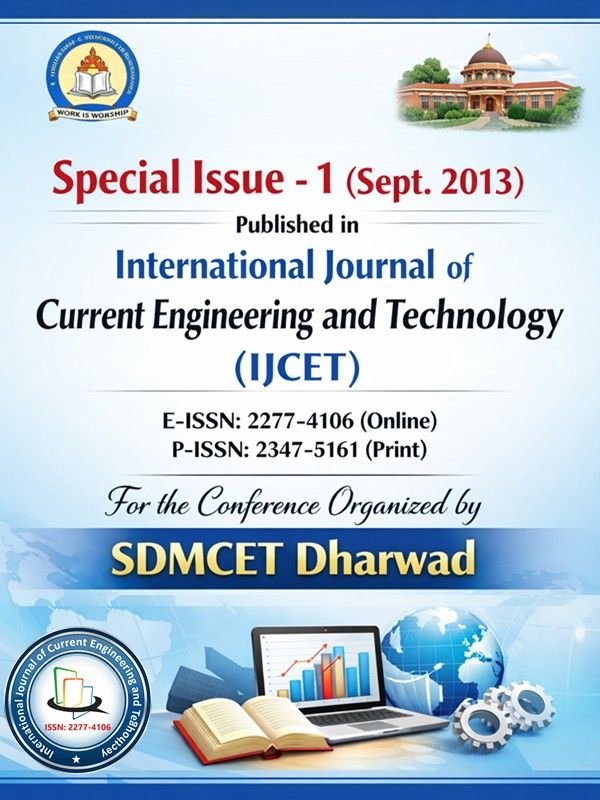
Special Issue-1 (Sep 2013)
The Special Issue-1 (September 2013) of the International Journal of Current Engineering and Technology (IJCET), published by INPRESSCO, served as the proceedings of the National Conference on Women in Science & Engineering (NCWSE 2013), organized by SDM College of Engineering and Technology (SDMCET), Dharwad. This special issue brought together a diverse collection of research papers contributed by women scientists and engineers across multiple disciplines, including civil engineering, electronics, computer science, and environmental studies. It provided a valuable platform to showcase and celebrate women's contributions to science and technology, fostering academic discourse and encouraging greater participation of women in STEM fields across India.
-
Vol.2. No.4 Oct/Dec 2012)
Closing the 2012 volume, this issue focused on diverse engineering applications ranging from thermal systems to software engineering. It included research on energy conservation, computational modeling, and innovative design methodologies. The editorial team emphasized the importance of multidisciplinary approaches, encouraging collaboration between mechanical, electrical, and computer engineers. Articles demonstrated how integrated solutions could address complex challenges in industry and academia. This issue reinforced the journal’s commitment to publishing high-quality research that inspires innovation and supports technological progress. By concluding the year with impactful contributions, the journal strengthened its position as a trusted source of engineering knowledge worldwide.
-
Vol.2, No.3 (Jul/Sep 2012)
The third issue of Volume 2 emphasized applied engineering practices and technological innovation. Published in 2012, it featured articles on manufacturing processes, robotics, and material science. Authors explored ways to enhance productivity through automation and advanced fabrication techniques. The issue also addressed challenges in communication technologies, reflecting the growing importance of connectivity in engineering solutions. By presenting both case studies and theoretical advancements, the journal ensured relevance to academia and industry alike. This issue highlighted the journal’s vision of fostering research that not only advances knowledge but also delivers practical benefits to society through engineering excellence.
-
Vol.2, No.2 (Apr/Jun 2012)
The second issue of 2012 showcased the journal’s dedication to interdisciplinary research. Contributions spanned civil engineering, electronics, and computer science, highlighting the interconnected nature of modern technology. Several papers focused on automation and control systems, reflecting the rapid industrial adoption of intelligent solutions. The issue also included studies on structural engineering, offering practical insights for infrastructure development. By balancing theoretical models with experimental validation, the journal provided readers with applicable knowledge. This issue reinforced the journal’s role as a hub for engineers and technologists seeking innovative strategies to improve efficiency, safety, and sustainability across diverse engineering domains.
-
Vol.2, No.1 (Jan/Mar 2012)
The first issue of Volume 2 continued the journal’s momentum by expanding its coverage to emerging technologies. Published in 2012, it featured papers on renewable energy systems, advanced materials, and computational techniques. This issue emphasized sustainability, recognizing the growing need for eco-friendly engineering solutions. Authors presented innovative approaches to energy efficiency and resource optimization, aligning with global priorities. The journal’s editorial team reinforced its commitment to quality peer review, ensuring that each article contributed meaningfully to the field. This issue demonstrated how engineering research could directly address pressing societal concerns while maintaining academic rigor and technical excellence.
-
Vol.1, No.1 (Nov/Dec 2011)
The inaugural issue of the International Journal of Current Engineering and Technology marked a significant milestone in scholarly publishing. Released in 2011, it set the foundation for a platform dedicated to advancing engineering and technology research. Articles in this issue explored fundamental innovations in mechanical design, electrical systems, and applied sciences, reflecting the journal’s mission to bridge theory with practice. By encouraging contributions from diverse regions, the issue highlighted the importance of global collaboration in solving engineering challenges. It established the journal’s reputation as a credible source for academics, researchers, and industry professionals seeking cutting-edge knowledge.
